Trees are one of nature’s best solutions to climate change, as powerful sinks for atmospheric carbon. Yet today, our national forests are underfunded and increasingly threatened by climate-driven wildfires, drought, and pests.
The REPLANT Act will modernize the Reforestation Trust Fund to triple reforestation rates in our national forests, in turn creating thousands of forestry-related jobs and spurring economic recovery in rural communities across the country. By planting 1.2 billion trees over the next decade, the REPLANT Act will help U.S. forests capture 75 million metric tons of carbon – essentially erasing the use of 85.3 billion gallons of gasoline.
The REPLANT Act is a powerful, bipartisan solution that:
More than 300 corporate leaders have asked the Biden administration to nearly double the emission reduction targets set by the Obama administration.
The letter reads:
Dear President Biden,
We, the undersigned businesses and investors with a major presence in the U.S., applaud your administration’s demonstrated commitment to address climate change head-on, and we stand in support of your efforts.
Millions of Americans are already feeling the impacts of climate change. From recent extreme weather to deadly wildfires and record-breaking hurricanes, the human and economic losses of the past 12 months alone are profound. Tragically, these devastating climate impacts also disproportionately hit marginalized and low-income communities who are least able to withstand them. We must act now to slow and turn the tide.
As business leaders, we care deeply about the future of the U.S. and the health of its people and economy. Collectively, our businesses employ nearly 6 million American workers across all 50 states, representing over $3 trillion in annual revenue, and for those of us who are investors, we represent more than $1 trillion in assets under management. We join the majority of Americans in thanking you for re-entering the U.S into the Paris Agreement and for making climate action a vital pillar of your presidency. To restore the standing of the U.S. as a global leader, we need to address the climate crisis at the pace and scale it demands. Specifically, the U.S. must adopt an emissions reduction target that will place the country on a credible pathway to reach net-zero emissions by 2050.
We, therefore, call on you to adopt the ambitious and attainable target of cutting GHG emissions by at least 50% below 2005 levels by 2030.
A bold 2030 target is needed to catalyze a zero-emissions future, spur a robust economic recovery, create millions of well-paying jobs, and allow the U.S. to “build back better” from the pandemic. New investment in clean energy, energy efficiency, and clean transportation can build a strong, more equitable, and more inclusive American economy. A 2030 target will also guide the U.S. government’s approach to more sustainable and resilient infrastructure, zero-emissions vehicles and buildings, improved agricultural practices, and durable carbon removal. Finally, the commitment would inspire other industrialized nations to set bold targets of their own.
Many of us have set or are setting emissions reduction goals in line with climate science since the establishment of the Paris Agreement. The private sector has purchased renewable energy at record rates and along with countless cities across the country, many have committed themselves to a net zero-emissions future.
If you raise the bar on our national ambition, we will raise our own ambition to move the U.S. forward on this journey. While an effective national climate strategy will require all of us, you alone can set the course by swiftly establishing a bold U.S. 2030 target.
Mr. President, we ask that you invest in a resilient, economically sound, net zero-emissions future for all. You can count on our support.
Even though we have a pandemic and people are less active and traveling less, a new record CO2 level was measured this week.
CO2 concentration at the Mauna Loa Observatory reached a daily record of 421.21 Parts Per Million (PPM) on April 3. This is the first time in the recent measured record that PPM has topped 420 PPM. This map shows peak PPM values per year dating to the 1970s. Notice a trend? pic.twitter.com/K0Ioksncfb
Climate Change and Forests in Minnesota: Alternative Futures
Forests in Minnesota have dramatically different futures depending on the CO2 emissions scenario that we follow as a society. For the business as usual scenario, the state would lose all of the boreal forest (cold climate conifer and birch forests of northern MN), and much of the state would support prairies rather than forests by 2070. For a low emissions scenario, forests would experience much smaller changes, with some boreal forest remaining in the north.
Presenter: Lee Frelich is Director of the University of Minnesota Center for Forest Ecology. He has over 180 publications with 265 coauthors from 23 countries and has appeared in the news media over 500 times, including the New York Times and Washington Post. Current research interests include impacts of fire and wind disturbances, invasive earthworms, and climate change in forests.
This event was co-sponsored by:
Resilient Roseville, a Roseville citizens climate action group
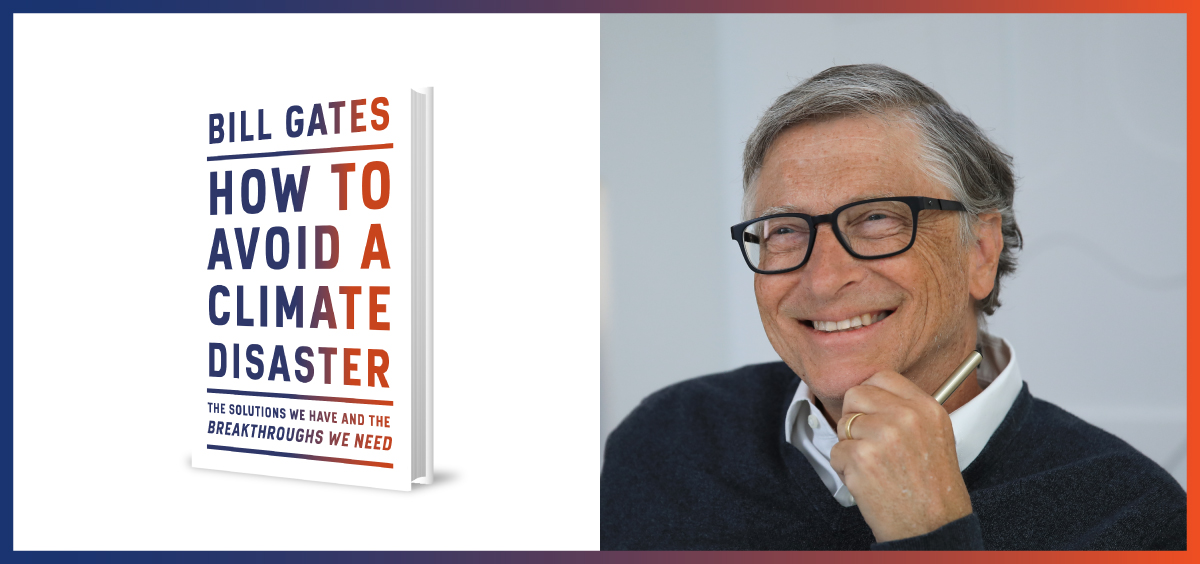
Bill Gates released a new book today on climate change. He wrote the book to give readers a better understanding of what we need to do to avoid a climate disaster.
Excerpt from How to Avoid a Climate Disaster:
Two decades ago, I would never have predicted that one day I would be talking in public about climate change, much less writing a book about it. My background is in software, not climate science, and these days my full-time job is working with my wife, Melinda, at the Gates Foundation, where we are super-focused on global health, development, and U.S. education.
I came to focus on climate change in an indirect way—through the problem of energy poverty.
In the early 2000s, when our foundation was just starting out, I began traveling to low-income countries in sub-Saharan Africa and South Asia so I could learn more about child mortality, HIV, and the other big problems we were working on. But my mind was not always on diseases. I would fly into major cities, look out the window, and think, Why is it so dark out there? Where are all the lights I’d see if this were New York, Paris, or Beijing?
I learned that about a billion people didn’t have reliable access to electricity and that half of them lived in sub-Saharan Africa. (The picture has improved a bit since then; today roughly 860 million people don’t have electricity.) I began to think about how the world could make energy affordable and reliable for the poor. It didn’t make sense for our foundation to take on this huge problem—we needed it to stay focused on its core mission—but I started kicking around ideas with some inventor friends of mine.
In late 2006 I met with two former Microsoft colleagues who were starting nonprofits focused on energy and climate. They brought along two climate scientists who were well versed in the issues, and the four of them showed me the data connecting greenhouse gas emissions to climate change.
I knew that greenhouse gases were making the temperature rise, but I had assumed that there were cyclical variations or other factors that would naturally prevent a true climate disaster. And it was hard to accept that as long as humans kept emitting any amount of greenhouse gases, temperatures would keep going up.
I went back to the group several times with follow-up questions. Eventually it sank in. The world needs to provide more energy so the poorest can thrive, but we need to provide that energy without releasing any more greenhouse gases.
Now the problem seemed even harder. It wasn’t enough to deliver cheap, reliable energy for the poor. It also had to be clean.
Within a few years, I had become convinced of three things:
To avoid a climate disaster, we have to get to zero greenhouse gas emissions.
We need to deploy the tools we already have, like solar and wind, faster and smarter.
And we need to create and roll out breakthrough technologies that can take us the rest of the way.
The case for zero was, and is, rock solid. Setting a goal to only reduce our emissions—but not eliminate them—won’t do it. The only sensible goal is zero.
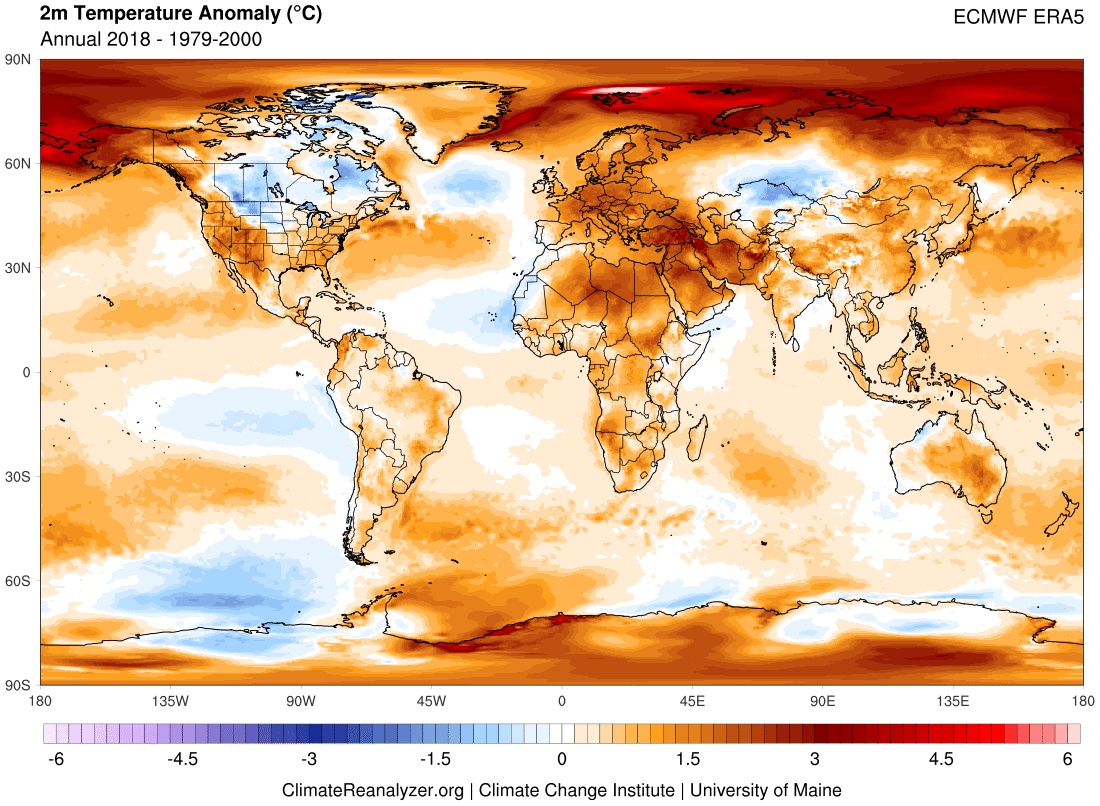
Have you ever wanted to take a look at the climate models or a world look at today’s temperature? Try the Climate Reanalyzer: https://climatereanalyzer.org/ The climate reanalyzer is a service of the Climate Change Institute, the University of Maine, and the NSF.
In 2017, Michael Bloomberg and former California Governor Jerry Brown launched America’s Pledge in the wake of President Trump’s decision to pull out of the Paris Agreement, to ensure that U.S. climate progress continued despite federal inaction. Since then, America’s Pledge has annually aggregated and quantified the actions of U.S. states, cities, businesses and other non-federal actors to drive down their greenhouse gas emissions in line with the Paris Agreement, presenting these findings to the United Nations.
America’s Pledge published a progress report in September 2020. The report assesses how states, cities, and businesses are continuing to drive climate progress despite the events of 2020—including the COVID-19 pandemic and economic recession—and increasing our confidence in the country’s ability to achieve the 2030 emissions reductions modeled in Accelerating America’s Pledge.
Bottom-up climate leadership has kept the U.S. on a path of progress. Since the launch of We Are Still In and America’s Pledge in 2017, climate action by U.S. states, cities, and businesses has increased dramatically. Despite four years of environmental rollbacks from President Trump’s administration, bold climate actions from non-federal actors have successfully counterbalanced the climate denial and obstruction from the White House.
Post-election federal leadership can put Americaback in alignment with the Paris Agreement. If the federal government re-engages, invests in a green stimulus recovery and works together with states, cities, and businesses to enact climate-forward policies, we can cut emissions by 49% from 2005 levels by 2030 and put America back in alignment with the Paris Agreement, reaching net zero emissions by 2050.
America has passed a tipping point in its clean energy transition. Unprecedented non federal leadership, strong market forces, and overwhelming public demand for climate solutions all suggest that clean energy is here to stay.
Ambitious, expanded action by U.S. states, cities, and businesses can reduce emissions up to 37% by 2030. Despite the pandemic and economic recession, non-federal climate action can still substantially reduce emissions, with or without help from Washington.
The global pandemic and economic recession have not impeded non-federal climate action. America’s Pledge identifies five key sectors with the greatest 2030 emission reduction opportunities: electricity, transportation, buildings, methane, and HFCs. Confidence in these sectors’ ability to drive ambitious 2030 emission reductions has increased, with the exception of buildings, in which confidence has remained unchanged.